

The Robotics Challenges

Inspire real-world problem solving with ready-to-teach engineering challenges that support you every step of the way.
Each challenge invites young people to ask bold questions, imagine creative solutions, design, build, test and improve, developing the skills and thinking of real engineers along the way.
Written to build teacher confidence in Design & Technology, Computing and Science, the resources are practical, accessible and fully aligned with the national curricula for England and Scotland.
Each challenge has 2 versions - one for ages 7-11 and one for 11-14 yrs.
‘Ready Set Robotics’ are 2 introductory sessions that springboard into each of the Eng Ed Challenges.
Ask - Imagine - Create


Learners choose a real-world challenge and design a robot that uses engineering to make a positive difference locally or globally.

Learners design and test a creative prototype that helps engineers safely capture space debris using everyday materials.

Every young engineer deserves to have their achievements recognised.
Celebrate the creativity, problem-solving and teamwork your pupils have demonstrated with an Engineering Educates Certificate of Participation.
Designed for everyone who completes a Robotics Challenge, it’s a simple way to recognise their hard work, build confidence and celebrate the skills they’ve developed along the way.
Learners take on a real-world brief, designing delivery robots that meet user needs through structured engineering thinking.

Motion in the Ocean Challenge has UNESCO Ocean Decade accreditation
〰️
Motion in the Ocean Challenge has UNESCO Ocean Decade accreditation 〰️
Learners explore types of motion and mechanisms as they design innovative animatronic prototypes for deep-sea exploration with this UNESCO accredited challenge.

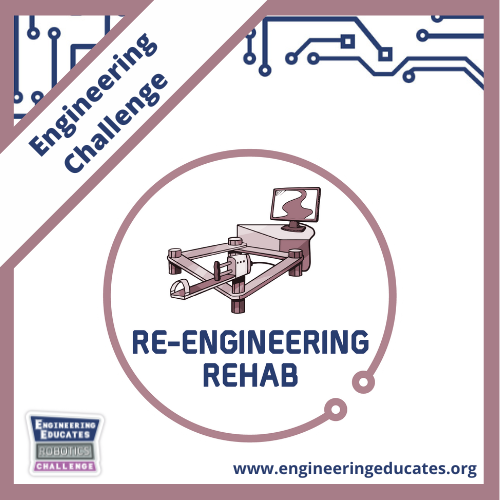
From empathy to engineering - learners use micro:bits to design rehabilitation robots, with no prior experience needed by staff or learners.
Using electronics and microcontrollers, learners create robots to navigate and investigate mysterious places.

Learners explore how engineers design, adapt, and test UAVs and use creative problem-solving to prototype aerial solutions.

Learners design and prototype robots capable of working in extreme underground environments.


Ready… Set… Reflect
The engineering doesn’t have to end when the challenge does.
Revisiting learning after a challenge gives pupils time to reflect on their experience, think critically about their decisions and make connections between what they did and what they learned.
A couple of weeks after completing the challenge, use our ready-to-share reflection slides to bring pupils back together, revisit their engineering journey and explore how their thinking has developed.
Celebrate Their Achievements

All challenges are supported by the EngEd Toolkit.
Not sure which Challenge is for you? Start with the curriculum guides.
